

A SIMPLE QUESTION STILL UNANSWERED
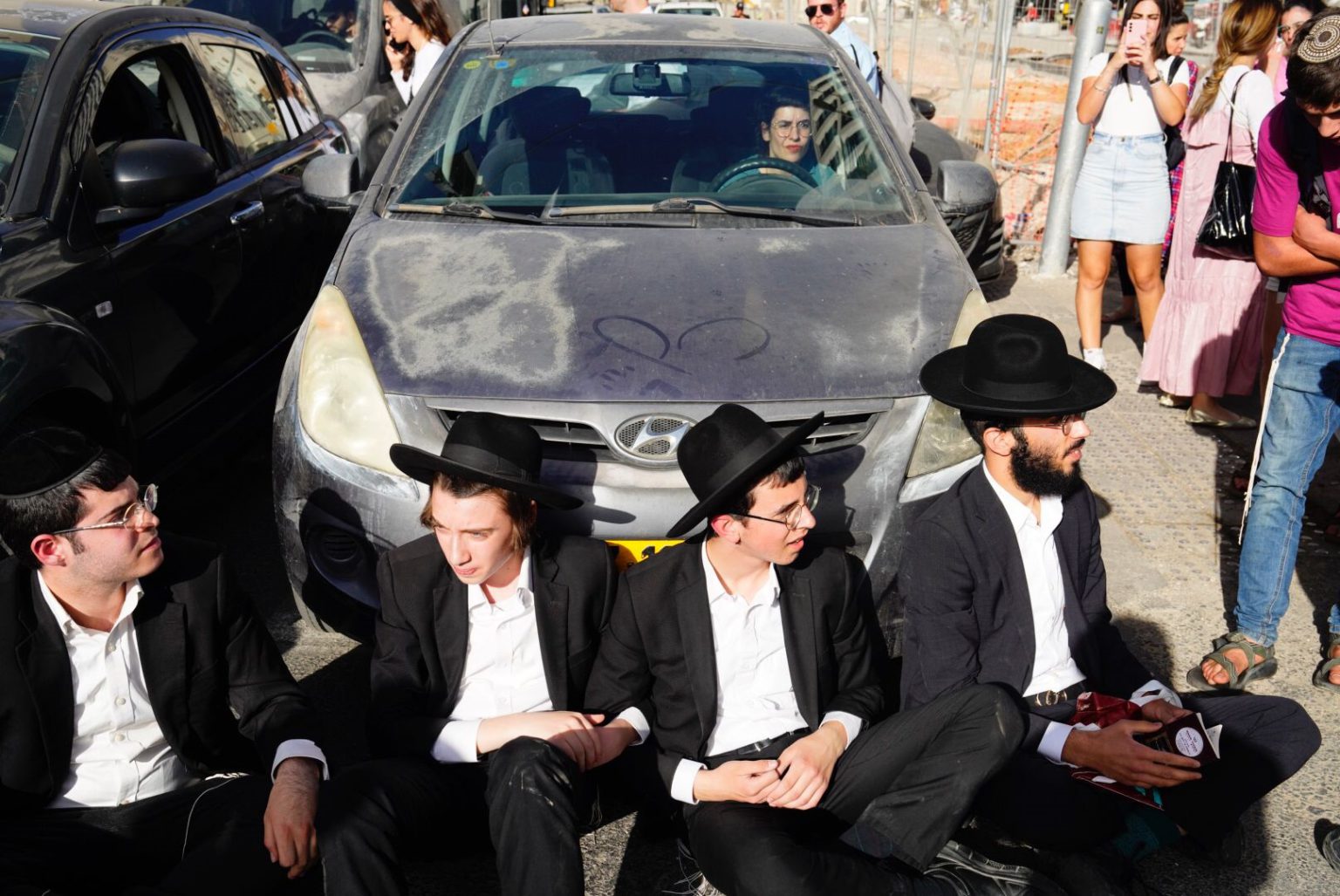
I truly appreciate the lengthy response to my article by Charedim.com, and I am pleased that its authors now explicitly and unequivocally agree on several central points: that the conduct we witnessed from Charedi protesters was wrong; that it caused a Chillul Hashem; that leadership must draw clear lines; and that my argument for a clear public statement has genuine force.
Boruch shekivanti.
The article represents considerable progress.
Nevertheless, beneath all the polished prose and generous-spirited discussion, the central question I raised in my original article remains unanswered.
The article claims that “calls and notices were issued” against blocking trains, endangering lives, and turning legitimate grievances into lawlessness.
Really? By whom? When? Where were they published? What precisely did they say?
My article specifically invited the authors to produce any clear statement issued last week, while the protests were ongoing, by leading Israeli Charedi rabbanim condemning the road blockages, railway disruptions, attacks on police, intimidation of motorists, and other dangerous behavior associated with these protests.
Many of the most senior Gedolim are currently in the United States on a fundraising mission for Keren Olam HaTorah, with ample opportunity to make public statements. Their every move has been—and continues to be—followed eagerly by Charedi communities in Israel and America. I have seen countless video clips from asifos and private dinners, including extensive excerpts from speeches.
But not one word about the chaos back in Eretz Yisroel.
Instead of producing any such condemnatory statement, the authors of the response simply assure us that statements and strong warnings were issued.
I say: if so, produce them. And publicize them as widely as possible, just as you publicized your article responding to mine—on X, through WhatsApp groups, and across the Charedi media.
The authors also devote considerable space to explaining what provoked the demonstrations—namely, arrests, sanctions, funding cuts, hostility toward the Israeli Charedi community, and the genuine anguish surrounding the draft issue.
I am fully aware of all these phenomena, and I entirely agree that what is happening is truly dreadful. But my article was never intended to address whether Charedim in Israel have legitimate grievances. They undoubtedly do. Nor was it an attempt to adjudicate every aspect of the draft controversy.
The question I wished to address was much narrower: do those grievances justify lawlessness and the deliberate infliction of suffering on innocent members of the public?
And if they do not—and, thankfully, the authors clearly agree that they do not—why have the leading voices of the Charedi world not said so publicly, forcefully, and unambiguously?
Explaining anger is not the same as justifying conduct. A person can be genuinely wronged and still respond wrongly. And when you are wrong, you are wrong, notwithstanding the fact that you were provoked into behaving badly.
In any event, one does not need to settle the entire draft controversy before declaring that blocking highways, stopping trains, threatening motorists, and endangering the public are forbidden.
The comparison to Israel responding militarily to Hezbollah is particularly misplaced—and rather tasteless.
Israel is a sovereign country defending its citizens against an armed terrorist organization. Israeli motorists trying to reach work, hospitals, airports, weddings, funerals, or military bases are not Hezbollah. They are innocent people deliberately made to suffer by protesters seeking leverage.
I find the analogy utterly inappropriate.
The authors also emphasize that the demonstrations were organized by Peleg Yerushalmi, which rejects the authority of the mainstream Gedolim. But rather than weakening the case for a public statement, this strengthens it.
If these activists do not represent mainstream Charedim, let the mainstream Charedi leadership say so. If their conduct is forbidden, let that be stated clearly.
Even if the hardened leaders and followers of Peleg would ignore such a declaration, others would hear it: mainstream bachurim, parents, educators, politicians, journalists, police officers, and ordinary non-Charedi Israelis.
And when the leadership fails to condemn the protesters forcefully, the strong implication is that it tacitly approves of—or is at least willing to tolerate—their behavior.
Indeed, the response concedes that my argument in this regard is “fair and weighty” and “has force.” Once the authors acknowledge that, their original claim that public condemnation is merely ineffective theatre for hostile outsiders is no longer sustainable.
The authors also object to my willingness to criticize the silence of the Gedolim. They suggest that one may respectfully ask questions but may not publicly conclude that their approach is wrong.
I totally reject that distinction.
Kavod haTorah demands respect, seriousness, and humility. It does not require intellectual surrender. Gedolim are entitled to profound respect, but their public decisions—and their silence during public crises—are not beyond discussion.
Nor did I claim to know their private motives. I simply observed that silence can reflect dignity and wisdom, but it can also reflect fear, political convenience, confusion, or an unwillingness to confront extremists.
When the silence continues while the Chillul Hashem unfolds publicly, people will inevitably ask which explanation applies.
I am not issuing a verdict. I am raising the issue for consideration.
To be clear, the simplest way to prevent people from reaching negative conclusions is not to reprimand those asking the question. It is for responsible leaders to speak.
There is one further irony worth noting.
My article appeared under my own name. My views are public, and I am accountable for every word I wrote.
The response, by contrast, is attributed only to an anonymous “we.” We are not told who wrote it, how many authors there are, or what standing they have to lecture others about the proper way to speak about Gedolim—or, for that matter, about any of the other issues they raise.
Which is curious.
The authors seem very concerned about my willingness to express a public judgment “from a distance,” and they devote an entire section to questioning whether I should have said what I said. But while criticizing me personally and by name, they have chosen not to attach their own names to their criticism.
Why the anonymity?
Are they afraid of the consequences of expressing their views publicly? Are they unwilling to be held personally accountable for their claims? Or is their anonymity simply another example of the very phenomenon at the heart of this discussion—the desire to defend silence without accepting the responsibilities that come with speaking openly?
Perhaps there is an innocent explanation. I am dan lechaf zechus.
But those who demand humility, accountability, and careful public speech from others should at least have the courage to tell their readers who they are.
So, we are left where we began.
The authors agree that the conduct was wrong. They agree that it caused a Chillul Hashem. They agree that a public statement could influence people and draw a valuable moral boundary. And they claim that warnings were issued.
So, please produce them.
Until then, the defense of silence remains precisely that: A defense of silence.

Last week, California State Senator Scott Wiener introduced a proposal that is pure San Francisco. He wants the tunnel through Yerba Buena Island, which connects the two halves of the... Read More