

THE DETOX DELUSION
(For the SoundCloud audio, scroll down)
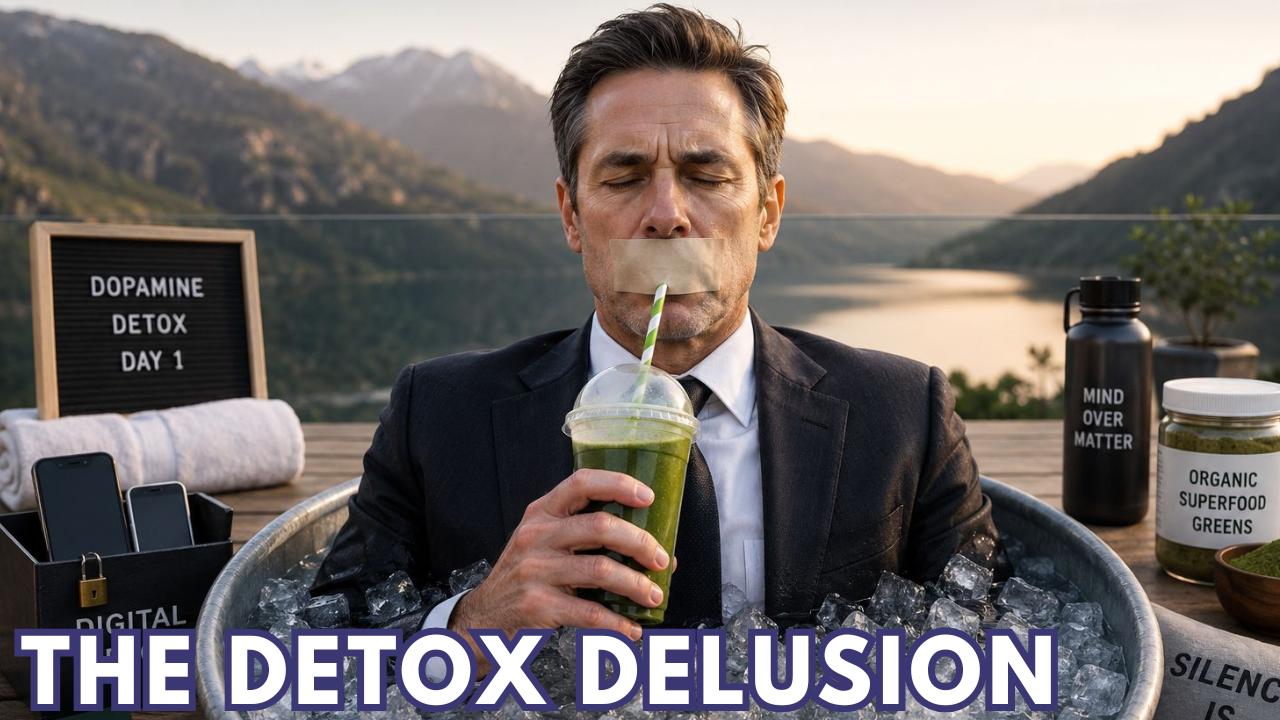
Some years ago, cool high-end executives became obsessed with something called a “dopamine detox.” The idea behind it was that modern life overstimulates your brain to such an extent that you need periodic retreats from pleasure itself.
Participants in these programs would spend entire weekends avoiding phones, email, music, television, alcohol, caffeine, sugar, fancy food, and in some cases even conversation and eye contact.
One version of the detox encouraged people to avoid all unnecessary stimulation for a full 24 hours — no talking, no reading, no internet, no entertainment, no exercise, and ideally no human interaction whatsoever. Kind of like a fully halachic Shabbat, but on a whole new level. Which sounds less like wellness and more like being trapped overnight at a remote airport after your phone battery dies.
The movement became especially popular among tech entrepreneurs, many of whom had helped create the very technologies they were now desperately trying to escape. Who could possibly have seen that coming?
But dopamine detoxing is only one example of modern society’s fascination with radical self-denial. Every few months a new trend emerges promising clarity, purification, or “nervous system regulation.”
Some people spend fortunes on silent retreats where nobody is allowed to speak for days at a time. Others immerse themselves in freezing ice baths every morning because a wellness influencer promised them it will unlock hidden mental strength. There are people who survive on juice cleanses, or voluntarily abandon smartphones for weeks so they can “reconnect with authenticity.”
Last year, a wellness trend called “mouth taping” exploded across TikTok and Instagram. Influencers began posting videos of themselves going to sleep with medical-grade adhesive tape literally sealing their mouths shut.
Supposedly, breathing only through the nose while sleeping would improve energy, sharpen concentration, reduce anxiety, enhance jawlines, improve metabolism, and possibly, one assumes, solve the crisis in the Middle East.
Sleep specialists were horrified, and medical experts repeatedly warned that the trend could be dangerous, especially for people with breathing disorders or sleep apnea. But none of it seemed to matter. Millions of people watched the videos, bought the tape, and tried it anyway.
But there’s a reason for all these extreme fads. Modern life feels noisy, chaotic, overstimulated, and unhealthy — technology dominates our attention, overprocessed food dominates our bodies, and social media consumes our emotional lives.
Which is why, every so often, society swings violently in the opposite direction. Suddenly people start craving silence and simplicity, and, more pointedly, restraint. It’s an instinct — however strange its modern expressions may be — that is actually very old.
In Parshat Nasso, the Torah introduces one of the world’s earliest detox regimens, and one of Judaism’s most fascinating and unusual personalities: the Nazir. The Nazir is someone who decides to opt out of ordinary life for a period of time. No wine, no haircuts, and no contact with the dead. It’s an act of self-denial designed to create spiritual elevation and discipline.
But here is where Judaism becomes deeply interesting. Because the Torah itself seems uncertain how to feel about the Nazir. On the one hand, the Nazir is called “holy.” After all, there is clearly something admirable about a person who recognizes the dangers of excess and tries to regain mastery over themselves. Self-control and self-discipline matter, and Judaism is very clear about the fact that not every impulse deserves immediate gratification.
But on the other hand, when the Nazir completes the vow, he has to bring a sin offering. The question is, why does he need to bring a sin offering for becoming more spiritual? What sin did the Nazir commit?
Rabbi Elazar Hakappar in the Talmud (Nazir 19a) gives a startling answer: the Nazir sinned by unnecessarily denying himself pleasures that God permitted. In other words, Judaism admires restraint — but distrusts performative restraint that borders on extremism. And it is this balance that may be one of the Torah’s greatest gifts to civilization.
Human beings have a tendency to overcorrect. When society becomes too materialistic, people swing toward asceticism; when life becomes too indulgent, people embrace radical denial. We are like pendulums. We move from one extreme to another, convincing ourselves each time that we have finally discovered the secret to a good life.
But Judaism consistently resists extremism. The Rambam famously writes that the ideal path in life is the “middle way” — neither reckless indulgence nor self-punishing denial, but the golden mean that integrates both.
Eat food. But don’t become obsessed with food. Earn money. But don’t worship money. Enjoy physical life. But don’t become enslaved by physicality. Drink alcohol. But don’t let alcohol control you. The Nazir is only relevant when balance has already broken down. As Rashi and other commentators explain, the Nazir was someone recovering from excess, and abstinence was a temporary corrective measure, never meant to be an ideal lifestyle.
It’s an idea that feels extraordinarily modern. Many of today’s wellness movements are really attempts to recover from imbalance. People aren’t trying desperate detox regimens because that’s the way to live your life. They’re doing it because they check their phones 400 times a day, or because they are overwhelmed by the excess of stimulants that seem available 24/7.
The cold plunges, fasting regimens, meditation retreats, and dopamine cleanses are symptoms of a deeper reality: modern life has lost equilibrium.
And truthfully, trends in faith communities are no different. Some people imagine holiness means withdrawing from ordinary existence entirely, setting ever-higher standards of piety that no one else can possibly meet. But Judaism doesn’t want us to escape the world. Our job as Jews is to live in the world as people of faith.
The Torah does not demand that we become monks or nuns. It asks us to become disciplined human beings living within the real world. Which is actually much harder.
Anyone can escape life for a weekend retreat in the mountains, or announce a radical detox, or post inspirational photographs from a silent meditation center. The real challenge is using technology without becoming addicted to it, and enjoying material blessings without being consumed by them.
That is exactly the Torah’s vision: not extremism, not being a Nazir, but balance. Perhaps that is why the Nazir was seen as a sinner, and brought an offering acknowledging that when emerging from their Nazir status.
Because Judaism ultimately wants us to return to and live ordinary life — hopefully a little wiser, a little calmer, and a little more in control than before. Which, frankly, sounds far more sensible than sleeping with tape over your mouth.

(For the SoundCloud audio, scroll down) Why can a person have everything and still feel empty? Parshat Ki Tavo offers a startling answer: fulfillment depends not on what we possess,... Read More