

THE FORGOTTEN CHILD
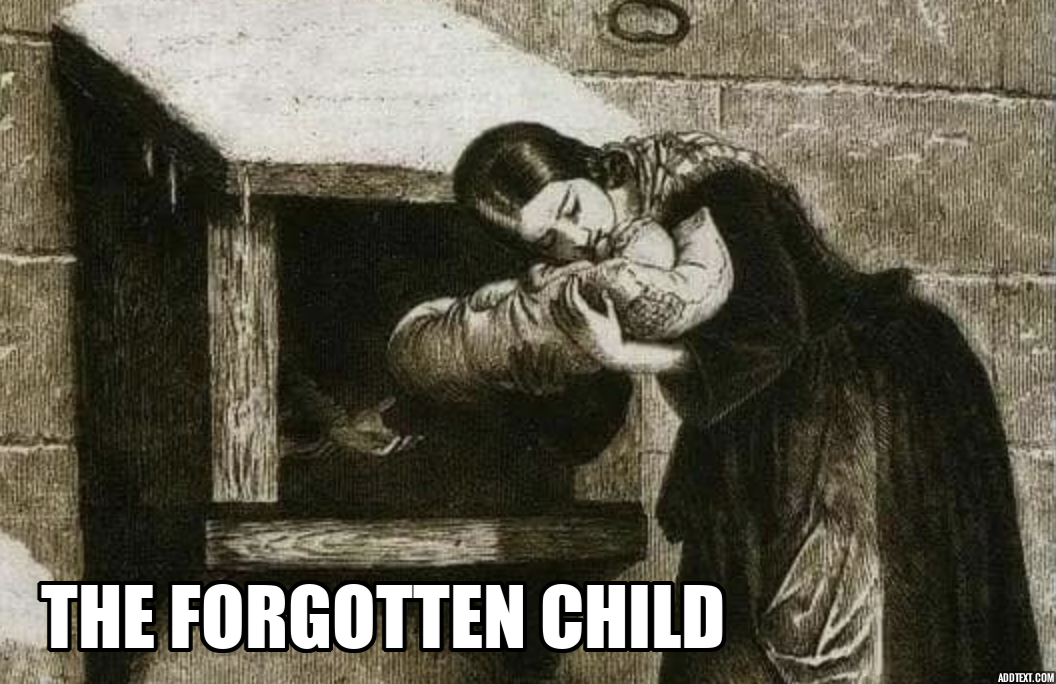
On March 25, 1741, the Foundling Hospital in London opened its doors to abandoned infants.
The institution had been created to address one of the grimmest realities of eighteenth-century London. Desperate mothers—often unmarried, impoverished, or abandoned themselves—were leaving newborn babies in streets, church doorways and public places.
The Foundling Hospital offered them an alternative: the child could be surrendered anonymously and raised under the institution’s care.
But demand quickly overwhelmed capacity. At first, children were admitted on a first-come, first-served basis. Then, in October 1742, the governors introduced a system they regarded as more impartial. A lottery.
On designated admission days, mothers arrived carrying their babies and were invited, one at a time, to draw a colored ball from a bag.
A black ball meant immediate rejection. The mother and child were sent away.
A white ball meant that the baby would be examined. If the child was young enough and showed no signs of infectious illness, the infant would be admitted.
A red ball offered a second chance, but only if one of the babies whose mother had drawn white failed the medical examination.
Usually, only thirty children could be admitted on any particular day. The remaining mothers returned to the streets of London carrying the babies they had hoped to save.
It is difficult to imagine the scene. It must have been horrific. Dozens of frightened women standing in silence, each cradling a child, waiting for fate to be determined by the color of a wooden ball.
Those who drew black knew immediately that the journey had been for nothing. Those who drew white faced a different agony. Their child might survive—but only because they were about to surrender their baby to strangers and walk away alone.
And then there were the tokens.
When a child was admitted, the Hospital recorded the details on a document, a piece of paper known as a billet. The baby was given a new name, and the mother was permitted to leave behind some small identifying object—a coin, a button, a ribbon, a thimble, a piece of jewelry, or a scrap of fabric.
Sometimes a coin was deliberately cut in half. One half remained with the child’s record; the mother kept the other.
The token was sealed inside the folded billet and kept hidden away. Should the mother ever return to reclaim her child, she would have to describe the object—or produce its matching half—to prove that the child was hers.
Around four hundred physical tokens survive in the Foundling Museum’s collection, alongside many thousands of paper and textile examples preserved in the archives.
Some mothers left written messages. One begged the Hospital to preserve her note as a token so that her son might be recognized “when circumstances will admit.” The spelling was uncertain and the handwriting unsophisticated, but the meaning was unmistakable: “I cannot keep you now. But I have not forgotten you.” It’s heartbreaking.
Some parents did eventually return. They came armed with dates, descriptions, matching pieces of ribbon, halves of coins, and whatever money or guarantees the Hospital demanded.
Between 1741 and 1790, records identify hundreds of children who were reclaimed, although reunion after years of separation was rarely as simple or sentimental as one might imagine. The child had often been renamed and knew nothing of the parent who had returned.
Many other parents never came back. We cannot know why.
Perhaps they died. Perhaps poverty continued to crush them. Perhaps shame made return impossible. Perhaps they married and feared revealing the secret of an earlier child. Or perhaps, with the passing of time, they had blanked out this moment of their lives.
But the token remained. Hidden inside a sealed document, unseen by the child, was evidence that at the moment of separation, someone had cared enough to leave behind a sign.
The child might grow up believing that he had been discarded without a second thought. He might imagine that his mother had walked out of the Hospital and never thought about him or her again.
But somewhere in the archives was a button, or a ribbon, or half a coin, or a badly spelled note. And it told a more complicated story.
The child had been left. But they had not necessarily been forgotten. There is an enormous difference between the two.
Separation is painful. But the belief that we have been forgotten — that our absence makes no difference, that the person who once loved us no longer thinks about us — that belief is devastating.
And you can find this exact tension in the haftarah for Parshat Eikev.
It is the second haftarah of the Shiva D’Nechemta, the seven prophetic readings of consolation that begin on the Shabbat after Tisha B’Av and continue through the weeks leading to Rosh Hashanah.
The sequence begins the previous week with Isaiah’s famous declaration (Isa. 40:1): נַחֲמוּ נַחֲמוּ עַמִּי – “Comfort, comfort My people.”
These are beautiful words. But curiously, they are not spoken directly to Zion. They are addressed to those who are expected to comfort her.
God commands that Jerusalem be reassured. To be told that her suffering has been seen and that her ruins will be rebuilt.
One might expect the next week’s haftarah to continue seamlessly in the same hopeful spirit.
Instead, Zion responds to the words of comfort with an accusation (Isa. 49:14): וַתֹּאמֶר צִיּוֹן עֲזָבַנִי ה׳ וַה׳ שְׁכֵחָנִי – “Zion said: ‘God has abandoned me, God has forgotten me.’”
It is one of the most painful statements in all the prophetic readings, and its appearance after Nachamu makes it more painful.
God has just ordered the prophets to comfort His people. And Zion’s response is, in effect: I do not believe you. “Do not tell me that everything will be all right. Look at my ruins. Look at my empty streets. Look at my children scattered across the world. You say that God still cares about me—but if that is true, where has He been? Where is He now?”
עֲזָבַנִי ה׳ וַה׳ שְׁכֵחָנִי — God has abandoned me. God has forgotten me.
It would seem that the Shiva D’Nechemta do not present consolation as an address, a speech delivered to a silent and grateful audience. Startlingly, they present consolation as a conversation.
First, comfort is offered. Then the mourner objects.
And, do you know what? That is exactly how real consolation works.
A person in pain does not always respond to reassurance by feeling reassured. Sometimes words of comfort make the pain worse. They can sound superficial, they can sound premature, they can even be offensive.
“Everything happens for a reason.”
“Time heals.”
“You must have faith.”
These statements may be well intentioned, and they may even contain an element of truth. But when spoken before the mourner has been heard, they often sound less like comfort and more like an attempt to shut down the conversation.
Zion refuses to allow that to happen. She does not politely accept the prophet’s consolation. She gives voice to the question beneath all Jewish suffering: If God still loves us, why did He allow this to happen?
And remarkably, God does not rebuke Zion for asking.
He responds (Isa. 49:15): הֲתִשְׁכַּח אִשָּׁה עוּלָהּ מֵרַחֵם בֶּן־בִּטְנָהּ גַּם־אֵלֶּה תִשְׁכַּחְנָה וְאָנֹכִי לֹא אֶשְׁכָּחֵךְ – “Can a woman forget her baby, or cease to have compassion for the child of her womb? Even these may forget—but I will never forget you.”
And then comes an extraordinary image (Isa. 49:16): הֵן עַל־כַּפַּיִם חַקֹּתִיךְ חוֹמֹתַיִךְ נֶגְדִּי תָּמִיד – “Behold, I have engraved you upon the palms of My hands; your walls are always before Me.”
It’s such an amazing image. At the Foundling Hospital, a mother left behind a token so that one day she might prove that the child belonged to her.
In Isaiah’s prophecy, God reverses the image. Zion does not need to preserve a token proving that she belongs to God. God carries the token Himself.
And it is not hidden in an archive or sealed inside a folded document. Zion is engraved upon His palms.
The mother at the Foundling Hospital might lose her half of the coin. She might forget what ribbon she left behind. She might be prevented from returning, or she might decide never to return.
גַּם־אֵלֶּה תִשְׁכַּחְנָה—even a mother may forget.
וְאָנֹכִי לֹא אֶשְׁכָּחֵךְ—but I will not forget you.
God does not entirely deny Zion’s first claim. Zion has experienced abandonment, it’s true. The Temple has been destroyed. The people have been driven into exile. Jerusalem has been left desolate. The pain is not imaginary.
But Zion has drawn a conclusion from that experience: because I have been abandoned, I must also have been forgotten.
And God responds that the conclusion is wrong. Distance is not indifference. Silence is not erasure. Exile is not the termination of the covenant.
The walls of Jerusalem may lie shattered, but they remain constantly before God. Every broken stone is known. Every empty space is seen. Every absent child is remembered. And Divine memory is not just sentimental.
The tokens at the Foundling Hospital had a practical purpose. The token was designed to enable a parent to return, establish the relationship, and take the child home.
This is just the same. When God says, “I have not forgotten you,” He is not saying that Zion occasionally crosses His mind.
The rest of the haftarah describes her children returning. Jerusalem looks around in astonishment as the exiles gather and asks (Isa. 49:21): מִי יָלַד־לִי אֶת־אֵלֶּה – “Who bore all these for me?”
The woman who believed herself bereaved suddenly discovers that her children are coming home.
Her memory in God’s hands becomes restoration in the real world.
And that is the true power of the Shiva D’Nechemta. Jewish tradition does not expect us to leave Tisha B’Av and arrive at joy overnight. We do not move in one step from flames and destruction into celebration and song.
The journey takes seven weeks.
First comes the instruction to comfort. Then comes the protest that comfort has failed.
And then, only after Zion’s accusation has been heard, can the prophetic conversation move forward—toward gathering, rebuilding, light and, ultimately, joy.
And by the conclusion of the haftarah, the Zion who began by saying that she had been forgotten hears a very different future (Isa. 51:3): כִּי נִחַם ה׳ צִיּוֹן נִחַם כָּל־חָרְבֹתֶיהָ וַיָּשֶׂם מִדְבָּרָהּ כְּעֵדֶן וְעַרְבָתָהּ כְּגַן־ה׳ שָׂשׂוֹן וְשִׂמְחָה יִמָּצֵא בָהּ תּוֹדָה וְקוֹל זִמְרָה – “For God has comforted Zion; He has comforted all her ruins. He will make her wilderness like Eden and her wasteland like the garden of God; joy and gladness will be found there, thanksgiving and the sound of song.”
The ruins have not been forgotten. They have been comforted. The wilderness has not been ignored. It has become a garden. The silence has not been explained away. It has been replaced by song.
The foundling child could only hope that somewhere, hidden in an archive, there remained a token proving that someone had once loved them.
Zion is promised something infinitely greater. Her token is not hidden in a folded document. It is engraved upon the hands of God.
And we are living in the generation that can see what those words mean. The children have returned. The streets of Jerusalem are once again filled with Jewish life. A language that lay dormant is spoken by millions. A land that mourned in silence now reverberates with prayer, laughter, and song.
The wounds are not erased, and the suffering is not forgotten—but neither are we. And now we pray for the promise to be completed, with the coming of Moshiach—במהרה בימינו אמן


(For the SoundCloud audio, scroll down) The Rosh Hashana machzor has 100’s of pages and the davening is really long. You already know about the shofar, the apple, the honey,... Read More