

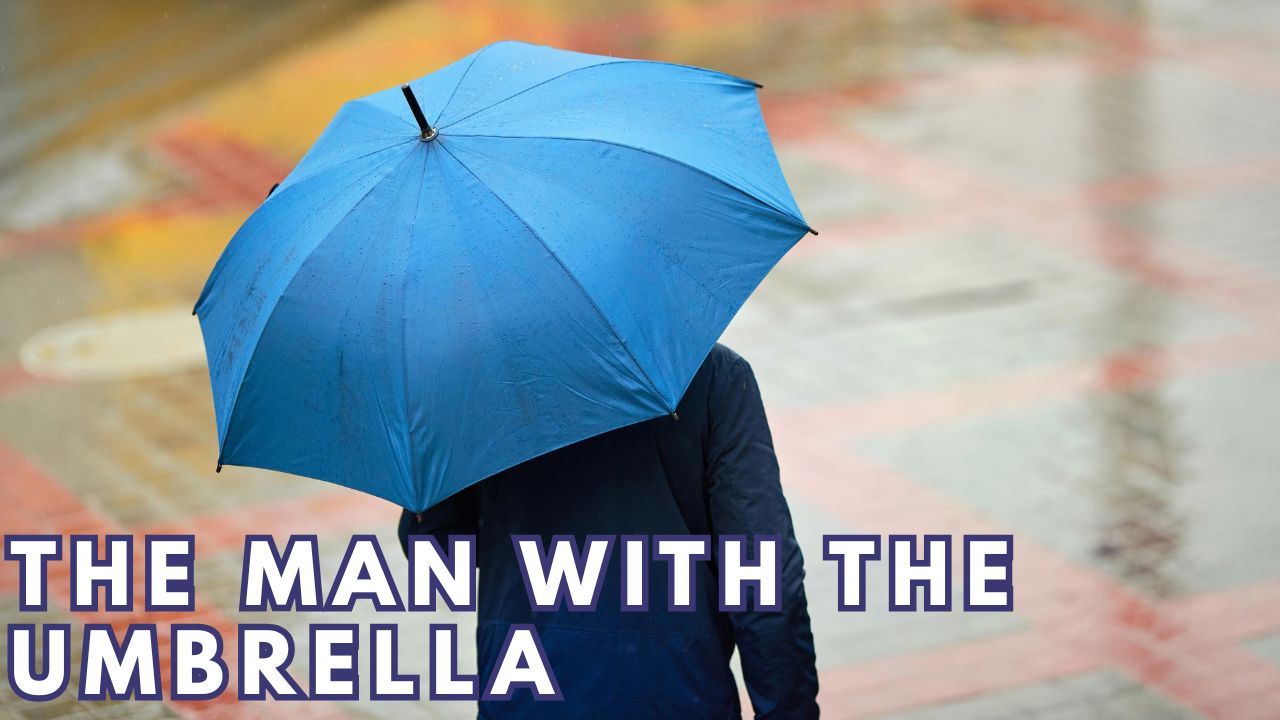
Jonas Hanway was not a man who was easily embarrassed. He was born in Portsmouth in 1712, and in adult life became a merchant, travelling through Russia and then Persia.
He wrote dozens of books and pamphlets, campaigned for poor children, helped establish charitable institutions, and even conducted a vigorous public campaign against tea — which, in eighteenth-century England must have been the most hopeless cause of them all.
But his most memorable feature was his obsession with umbrellas. Sometime around the middle of the eighteenth century, he began walking through London carrying an umbrella, and he continued doing so despite years of ridicule. Today this would not qualify as an act of civil disobedience. In Georgian London, apparently, it did.
Umbrellas existed, of course, but no respectable Englishman would carry one. They were associated with women and foreigners — particularly the French, which made them especially egregious. An English gentleman caught in the rain would hail a coach, or stoically get wet, or presumably stand under something while complaining about the weather.
But Hanway had seen umbrellas used abroad and concluded, quite reasonably, that allowing rain to soak through your clothes simply to demonstrate what a manly person you are was silly. So he carried an umbrella.
London laughed at him. People jeered. Meanwhile, sedan-chair carriers and hackney coachmen were hostile, because Hanway’s portable roof threatened their livelihood: if people could walk through the rain without hiring transport, who needed them?
One account records that Hanway endured decades of “staring, laughing, jeering, hooting, and bullying,” and even altercations with men who objected forcefully to his innovation. But he persisted, and by the time he died, umbrellas had become perfectly normal.
You could actually say that Hanway won. As a result of his dogged persistence, the Englishman acquired one of his most enduring and recognizable accessories: a private, portable roof.
Weirdly, the festival of Sukkot asks us to do almost exactly the opposite. It is fair to say that an umbrella represents a basic human instinct. Something unpleasant is coming from above, so we put something between ourselves and the sky.
But a sukkah is deliberately designed not to do that. We call the sukkah a dwelling, but by ordinary architectural standards it is not doing a very good job at it. The walls can be flimsy. The roof has to be made from organic material grown from the ground and detached from it.
It must provide more shade than sunlight, but not enough to totally protect you from the elements. Ideally, we should still be conscious of the sky above us. And if the rain becomes sufficiently unpleasant, Jewish law does not tell us to display heroic determination and sit there getting soaked. We go indoors.
No competent architect would describe that as a house. Which is precisely the point. The Torah says: בסוכות תשבו שבעת ימים — “You shall dwell in sukkot for seven days.” The sages explain this to mean that you need to leave your permanent dwelling and live in a temporary one.
The obvious lesson is that material security is fragile, and of course that is true. But I think there is something subtler going on. The mitzvah is not to abandon shelter. It is to live for a week under incomplete shelter.
Sukkot does not glorify exposure. Judaism doesn’t romanticize being cold, wet, poor, hungry, or homeless. We build walls. We put up schach. We bring in tables and chairs, good food, proper dishes, decorations, guests. The halacha actually tells us to treat the sukkah as our home. But then it requires one crucial architectural defect. The roof must never allow us to forget that there is a sky.
For the rest of the year, much of our life is devoted to eliminating exposure. We build stronger houses, acquire insurance, save money, lock doors, plan retirement, check weather forecasts, install alarms, diversify investments, schedule medical examinations and, if Jonas Hanway has anything to say about it, carry umbrellas. Which all makes perfect sense.
But the problem begins when protection turns into insulation. There is a point at which we become so successful at protecting ourselves from uncertainty that we start imagining uncertainty has disappeared.
A good bank balance begins to feel like a guarantee. A successful career starts looking permanent. Good health becomes an expectation. A strong relationship is assumed to require no further maintenance. Children who are doing well are mentally filed under “problem solved.”
And without ever consciously saying so, we build a roof so solid that we can no longer see beyond it.
Then comes Sukkot. A few days after Yom Kippur, when we have spent an entire day confronting the ultimate limits of human control, Judaism does not send us back into the house to congratulate ourselves on having completed the spiritual season. It sends us outside. And, fascinatingly, it calls this festival “the season of our joy.”
The most joyful festival on the Jewish calendar is celebrated under the least secure roof. Why? Perhaps because genuine happiness and absolute security are not the same thing. In fact, the pursuit of absolute security might make happiness impossible.
If I can only ever relax once every possible problem has been eliminated, I will never relax. There is always another risk. Another market movement. Another medical test. Another child to worry about. Another geopolitical crisis. Another roof tile that might leak.
Security says: I will be happy when nothing can go wrong. But Sukkot says: things can go wrong, and I can be happy anyway.
The Gemara records a famous disagreement about what the sukkot in the wilderness actually were. Rabbi Akiva understands them literally: the Jewish people lived in huts. Rabbi Eliezer says they were the miraculous Clouds of Glory with which God protected them.
At first glance, the two opinions seem miles apart. A makeshift hut is about as different from supernatural divine protection as you can get. But perhaps they are describing the same truth from opposite directions. The hut idea is that your protection is never complete. The Clouds of Glory idea is that your protection was never entirely yours.
Sukkot asks us to live with both ideas at once. Build the hut. Make it kosher. Make it beautiful. Bring out the nice food. Invite people in. Do everything human beings are supposed to do. But leave enough sky showing to remember that ultimately you do not run the weather.
The sukkah is not asking us to feel unsafe. It is teaching us the difference between being protected and pretending we are invulnerable.
Maybe it’s not so different from Hanway after all. Standing unnecessarily in the rain does not make you noble. If you can stay dry, stay dry. Judaism agrees. If it rains hard enough on Sukkot, go inside. But for seven days, before it rains, sit beneath a roof that could not possibly convince you that you control the heavens.
Jonas Hanway spent thirty years persuading London that there was no virtue in getting drenched simply because everybody else did. He was right.
But once a year Judaism asks us to put down the umbrella, look through the schach, and remember something equally important: A roof can keep out the rain, but it was never holding up the sky.